Home – Our Services – Low Fin Tubes
Low Fin Tubes
Low fin tubes for compact heat exchangers
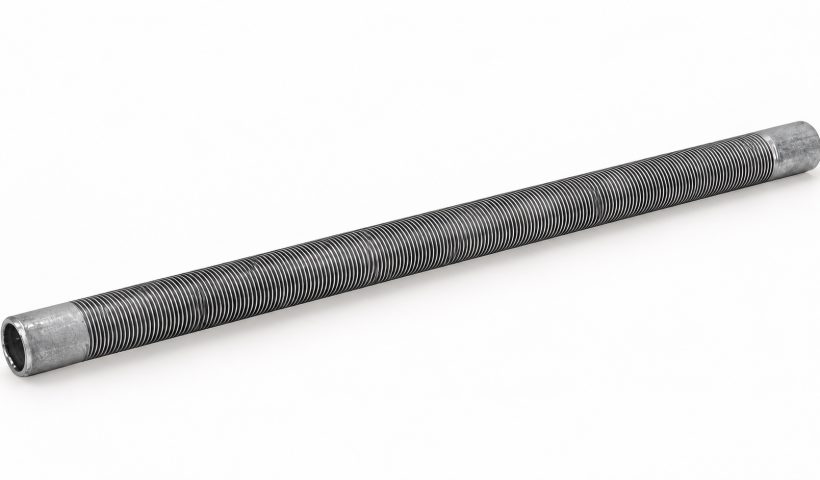
Low Fin Tubes: Maximum Efficiency in a Compact Design
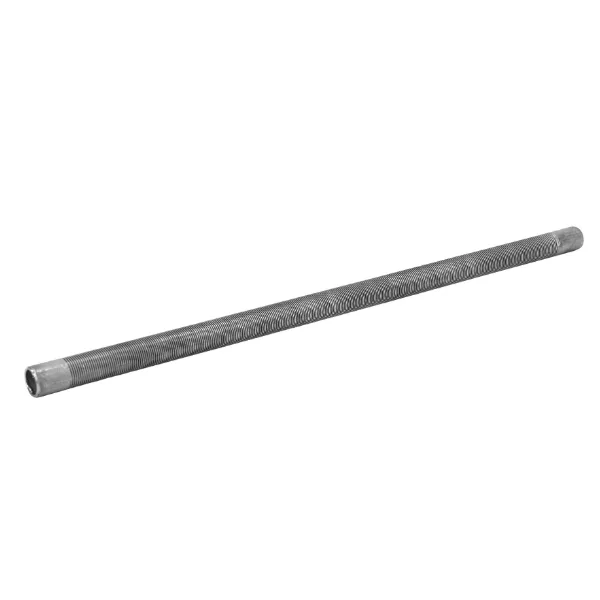
Low fin tubes are an efficient example of integrated heat transfer design, with fins formed directly from the tube material. Unlike conventional finned tubes, their fins are not added separately but are produced from the outer wall of a thick-walled base tube through cold rolling or extrusion.
Heatmek low fin tubes eliminate thermal contact resistance between fin and tube through integral fin technology. Since the fin is part of the tube, heat conduction is continuous and there is no risk of fins detaching or loosening.
Operating Principle and Structure of Low Fin Tubes
These tubes are called low fin because their fin height is typically limited to a few millimetres. The low height is offset by a high number of fins per unit length. Typical densities of 19–26 fins per inch greatly increase the total surface area compared with plain tubes.
- Cold Forming: Fins are formed by cold rolling the base tube material, supporting structural integrity.
- No Fin-to-Tube Contact Resistance: Without a separate interface, thermal conduction is continuous and there are no differential expansion effects from combining different metals.
- High Formability: Shallow, integral fins allow these tubes to be bent into U-shapes commonly used in tubular heat exchangers.
Applications and Industrial Benefits
Low fin tubes are used not only in air-cooled equipment but also extensively in shell and tube heat exchangers. They are particularly suitable where one fluid flows inside the tube and the other contacts the finned outer surface.
Common applications include:
- Refrigeration Systems: Efficient operation in refrigeration condensers and evaporators.
- Oil Coolers: A larger external surface improves cooling performance despite the high viscosity of oil.
- Chemical Processes: Corrosion resistance and structural integrity in tubular chemical heat exchangers.
- Compact Designs: The same capacity in a smaller volume than plain-tube exchangers where space is restricted.
Why Choose Integral Low Fin Tubes?
Heatmek low fin tubes have a homogeneous structure without joints between different metals. This supports structural integrity even under high temperature and pressure. Fins formed from the tube wall also provide greater resistance to external mechanical impacts than many other finned tube types.
For custom low fin tube solutions, contact the Heatmek engineering team.
Our Project Process
01. Requirements Analysis and Technical Assessment
02. Engineering Design and Calculations
03. Production Planning and Material Selection
04. Manufacturing and Assembly
05. Testing, Inspection and Approval
06. Delivery and After-Sales Support
Product Photos