Home – Our Services – Grooved Tubes
Grooved Tubes
Grooved tubes for demanding operating conditions
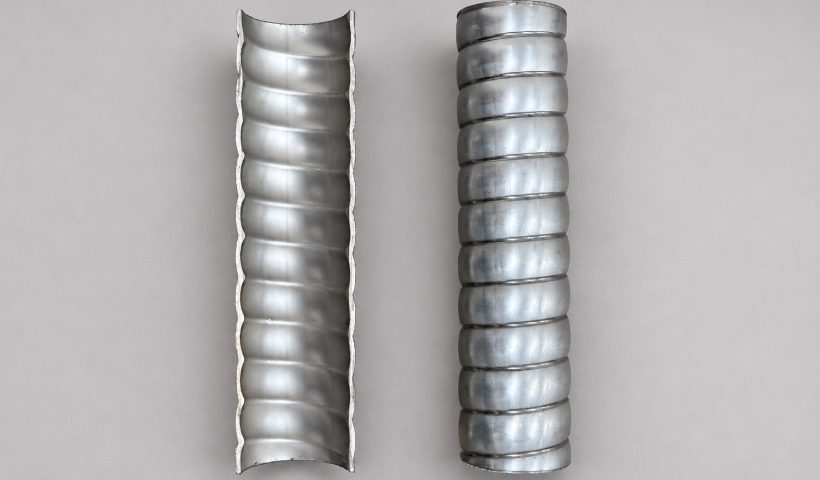
Grooved Tubes: High Turbulence and Heat Transfer Efficiency
Fluid properties, flow conditions and heat transfer surface area are key factors in heat exchanger efficiency. Grooved tubes use special helical patterns to increase fluid turbulence. This spiral structure promotes turbulence even at low fluid velocities, improving heat transfer compared with standard plain tubes.
Heatmek grooved tubes provide an external contact surface area 2.5 to 3 times greater than plain tubes. The helical forming process maintains material strength while allowing improved thermal expansion behaviour and longer mechanical service life.
Grooved Tube Applications
Grooved tubes are used across air conditioning and industrial processes. Where the application’s fouling characteristics are compatible with the design requirements, they are an efficient heat exchanger option.
Main applications include:
- Air Conditioning and Refrigeration: Evaporators and condensers.
- Industrial Systems: Air compression units, chillers and flue gas applications.
- Fluid Transfer: Steam, water, oil, glycol, alcohol and other specialist chemical applications.
Technical Features and Manufacturing Benefits
Grooved tubes are manufactured by forming helical patterns on their outer surface using specialist machinery. This directly increases surface area by approximately 5–10%, while the main efficiency benefit comes from changing flow dynamics.
- Turbulence: Helical patterns encourage continuous swirling and mixing, increasing the heat transfer coefficient.
- Thermal Expansion: The spiral structure helps the tube accommodate thermal shock more flexibly, protecting connections over time.
- Cost Savings: Greater efficiency allows smaller heat exchangers and can reduce total system cost.
Material Options and Standards
Because operating conditions and corrosion risks vary, grooved tubes can be manufactured from different metals. Heatmek product options include:
- Stainless steel and carbon steel grooved tubes
- Copper and brass grooved tubes
- CuNi10Fe copper-nickel alloy tubes for demanding applications
For custom grooved tube solutions, contact the Heatmek engineering team.
Our Project Process
01. Requirements Analysis and Technical Assessment
02. Engineering Design and Calculations
03. Production Planning and Material Selection
04. Manufacturing and Assembly
05. Testing, Inspection and Approval
06. Delivery and After-Sales Support
Product Photos