
How to Select a Hydraulic Oil Cooler: Capacity and Flow Rate
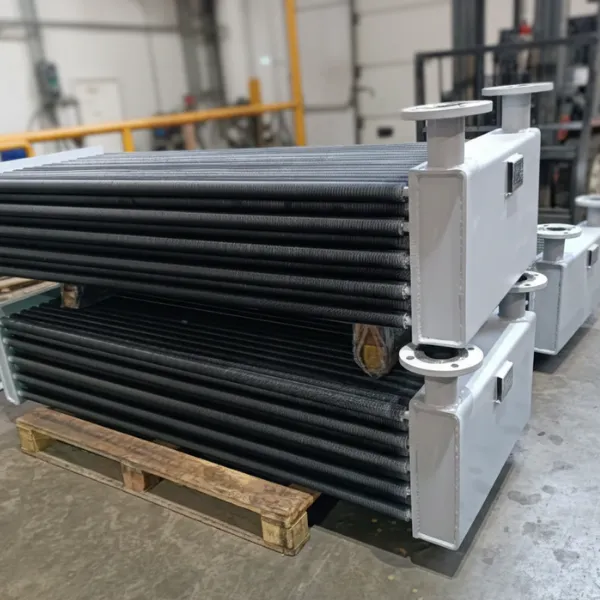
A hydraulic oil cooler removes heat generated in a hydraulic system. For presses, power units and industrial machinery, motor power or reservoir volume alone is not sufficient for selection. The heat to be removed must be compared with the cooler’s capacity under the actual operating conditions.
This guide covers industrial systems. Selecting automotive oil coolers by vehicle compatibility and part number is a different purchasing process.
Define the heat load and operating conditions first
Cooling duty is expressed in kW. It depends on the system’s operating cycle and the heat that must be removed from the oil. Do not assume that all rated motor power becomes heat in the oil. Manufacturer calculations, existing measurements and process data should be assessed together.
A quotation request should state oil inlet temperature, target outlet temperature and flow rate. Specify the oil grade as well: oils with different viscosities may produce different pressure drops at the same flow rate.
Air-cooled or water-cooled?
An air-cooled unit transfers heat from the oil to the surrounding air. The highest expected summer air temperature, unit location and any recirculation of hot discharge air are therefore important. If the catalogue reference ambient temperature differs from site conditions, the stated capacity should not be assumed unchanged.
For a water-cooled unit, cooling water inlet temperature, flow rate and quality are decisive. Seasonal changes in the water supply and maintenance requirements also need assessment. The choice should follow the available site infrastructure and process requirements.
Why must pressure drop be checked?
Passing oil through a cooler adds flow resistance. Allowable pressure drop must be assessed for the circuit in which the unit will be installed. During a cold start, oil viscosity can differ from its value at operating temperature, so a catalogue figure at one temperature may be insufficient.
Read the manufacturer’s capacity and pressure drop curves for the specified oil and flow conditions. Pressure surges, operating pressure and connection arrangements also form part of mechanical selection.
Information to prepare for a quotation
- Oil type and viscosity grade.
- Continuous and variable operating flow rates.
- Oil inlet temperature and target operating temperature.
- Heat load to be removed, if known.
- Design conditions for ambient air or cooling water.
- Circuit operating pressure and allowable pressure drop.
- Installation space, connection dimensions and maintenance access.
When replacing an existing unit, provide nameplate details, dimensions and temperature records taken during operation. Asking only for a radiator of the same size may reproduce the previous capacity problem.
Frequently asked questions
Is a larger cooler always better?
Size alone is not enough. Capacity at the actual flow rate, pressure drop and temperature control must be considered together.
Is excessive oil temperature always caused by the cooler?
No. Before selecting a cooler, review system loading, control settings, airflow and operating conditions.
Explore HEATMEK’s oil cooling radiator solutions. Share your industrial application data for a technical quotation.
Technical sources: Parker — Cooler Capacity and Pressure Drop Curves; Alfa Laval — Hydraulic Oil Cooling.