
Plate vs Shell and Tube Heat Exchangers: Key Differences
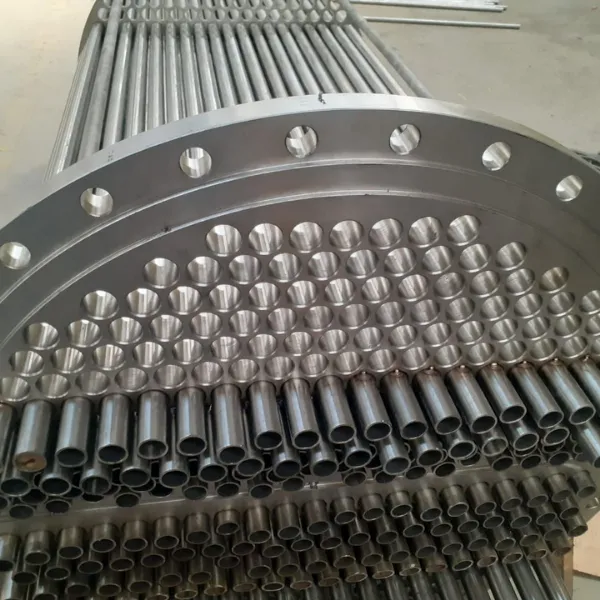
Shell and tube heat exchangers and plate heat exchangers both transfer heat between two fluids. Their separating surfaces and mechanical arrangements differ. Selection should consider process pressure, temperature, fouling and maintenance requirements alongside thermal duty.
HEATMEK’s shell and tube solutions transfer heat through a tube bundle in industrial applications. When comparing them with plate designs, assess both units against the same process data.
What is the structural difference?
In a shell and tube unit, one fluid flows inside the tubes and the other through the shell-side space. The tube bundle, heads and shell are key mechanical components. Different arrangements include fixed-tubesheet and U-tube designs.
In a plate heat exchanger, fluids flow through channels between plates. Gasketed, brazed and welded designs belong to this broad family, but their maintenance methods and operating limits differ. One temperature or pressure limit cannot be assigned to all plate heat exchangers.
Which criteria determine the choice?
Fluid characteristics and fouling
Particles, deposits and fouling tendency influence surface selection. Channel width, tube diameter and flow velocity must be assessed. Where deposits are expected, the cleaning method should be defined at the selection stage.
Operating temperature and pressure
Use the manufacturer’s design conditions for each unit. Gasket, braze and welded joint suitability must be checked alongside the material and mechanical design. General claims that plate units always suit low pressure and tubular units always suit high pressure do not cover every product family.
Maintenance and access
Consider which components can be opened and whether cleaning equipment can reach the surfaces. An accessible plate pack can be useful in a gasketed unit. In tubular designs, cleanability of the tube and shell sides depends on the arrangement. A non-removable bundle cannot be maintained as though it were removable.
Installation space and connections
Assess maintenance clearance as well as the equipment footprint. Connection positions, the handling route and compatibility with existing pipework should be reviewed together.
How should quotations be compared?
Compare quotations prepared for the same duty, inlet and outlet temperatures, flow rates and pressure drop limits. Check materials, design conditions, testing and scope of supply separately. Prices based on different operating points do not provide a meaningful technical comparison.
For example, a unit selected for a lower inlet cooling water temperature should not be assumed to deliver the same capacity in summer site conditions. This applies to both plate and shell and tube units.
Frequently asked questions
Can a plate unit directly replace a shell and tube exchanger?
Direct equivalence should not be assumed. Thermal performance, pressure drop, material compatibility and connections need reassessment.
Which type needs less maintenance?
Maintenance requirements depend on fluid properties, operating conditions and surface fouling. The equipment type alone does not determine maintenance frequency.
Send your process data to HEATMEK so we can assess a shell and tube solution. For existing performance problems, see our heat exchanger maintenance guide.
Technical sources: Alfa Laval — Heat Exchanger Technologies; Outokumpu — Material Assessment for Process Conditions.