
How to Size a Steam Air Heater: A Technical Selection Guide
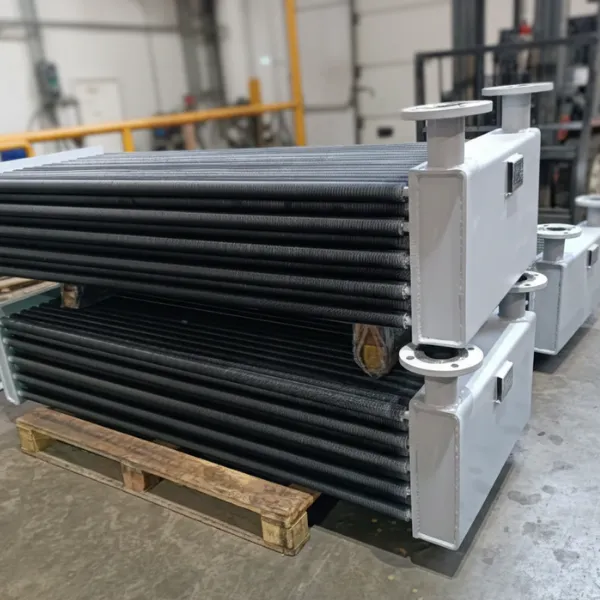
A steam air heater transfers heat from steam to air, usually through finned tube surfaces. In drying lines and process air heating, capacity selection starts with the airflow and the required temperature rise. Width, height and the number of tube rows alone are not sufficient for technical selection.
HEATMEK’s steam radiator solutions are assessed against the application’s temperature, pressure and duty requirements. Selecting a new unit and resolving a performance problem in an existing one require different investigations.
How is the air-side heat demand determined?
With air mass flow, specific heat capacity and the target temperature rise, an initial heat load can be calculated from the energy balance. For sensible heat, the basic relationship is Q = ṁ × cp × ΔT. With mass flow in kg/s, specific heat capacity in kJ/(kg·K) and temperature difference in K, the result is in kW.
Where volumetric flow is given, use air density at the design conditions to convert it to mass flow. Dehumidification, evaporation or additional process heat requirements mean that this simple relationship may not describe the whole system load. Product drying load and the heating load of air passing through the heater are different inputs.
Why does steam pressure matter?
Steam conditions inside the heater affect heat transfer and condensation. Boiler outlet pressure may differ from the pressure available in the unit downstream of the control valve. State where the pressure is measured when requesting a quotation.
Catalogue capacity applies to specified steam and air conditions. The same capacity should not be assumed at a different air inlet temperature, fan flow or steam pressure. Use the manufacturer’s performance data for the finned tube unit.
Condensate drainage is part of capacity assessment
Steam condenses as it releases heat. The resulting condensate must leave the unit. As a control valve throttles, internal steam pressure can fall; return-line back pressure may make drainage more difficult. This can flood part of the surface and create control problems.
Assess condensate removal, pipe layout and the control approach alongside equipment selection. A larger heater should not be assumed to be the only solution to inadequate heating. Our steam coil troubleshooting guide provides a separate starting point for these symptoms.
Assess the fan and pressure drop together
Air-side heater resistance can affect the flow the fan delivers. If a new unit will be fitted to an existing duct, provide fan information and the system’s pressure drop limit. More tube rows or closer fin spacing should not be treated as an improvement without checking the fan.
Information to include in a quotation request
- Airflow, inlet temperature and target outlet temperature.
- Humidity and additional process heat load, where relevant.
- Available steam pressure at the unit and its operating range.
- Condensate return conditions.
- Fan data and allowable air-side pressure drop.
- Installation dimensions, connection positions and maintenance clearance.
Frequently asked questions
Do two heaters of the same size have the same capacity?
No. Tube and fin arrangements, materials, airflow and steam conditions may differ.
Can a unit be selected using only its kW rating?
The kW rating is a starting point. The temperatures, flow rates and pressures at which that duty is achieved must also be stated.
Send your process data to HEATMEK so we can review thermal duty, installation requirements and the operating point together.
Technical sources: Spirax Sarco — Air Heaters; Spirax Sarco — Heat Exchangers and Stall.