Home – Blog – Shell and Tube Heat Exchangers – Shell and Tube Heat Exchanger Design
Shell and Tube Heat Exchangers
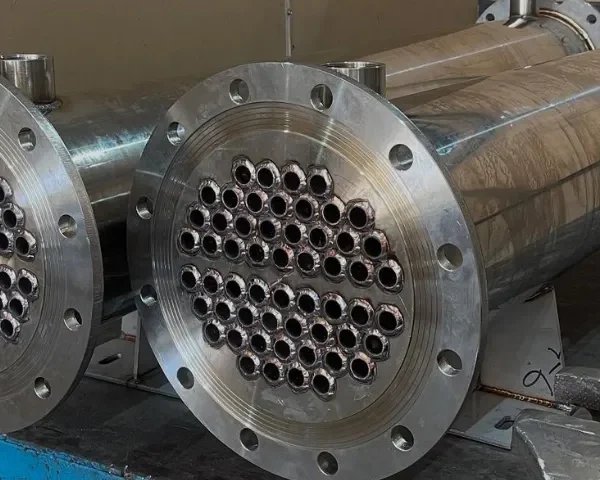
Although new heat transfer technologies continue to emerge, some designs remain widely used because of their robust construction, reliability and flexibility. Shell and tube heat exchangers are among these established designs. Suitable configurations can serve demanding pressure, temperature and fluid requirements within their specified design limits. HEATMEK combines this established approach with modern engineering to develop solutions for industrial applications.
Inside a Shell and Tube Heat Exchanger
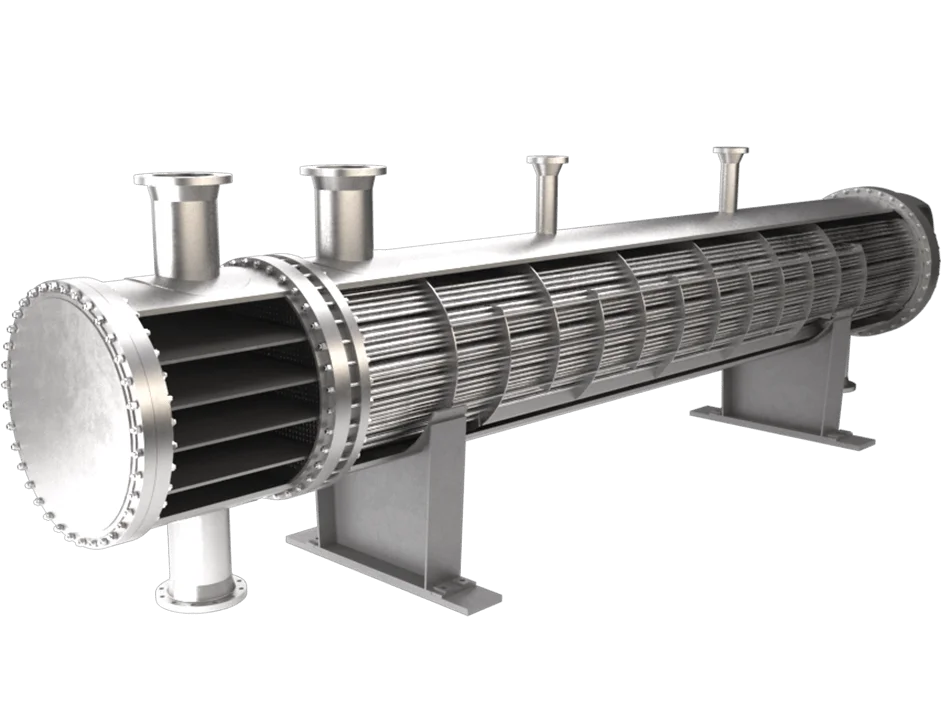
The basic arrangement is a tube bundle inside a cylindrical shell. One fluid flows through the tubes while the other passes through the shell and contacts their outside surfaces. This construction offers several design options:
Pressure and temperature capability: Mechanical design and material selection can be adapted to the specified service conditions, including demanding energy and process applications.
Material options: Shell and tube materials are selected for fluid chemistry and service requirements. Possible project materials include carbon steel, stainless steel and appropriate special alloys.
Maintenance access: Removable bundle designs can improve access for cleaning and inspection. The chosen construction determines which surfaces can be reached.
Thermal expansion: Fixed-tubesheet, U-tube and floating-head arrangements address expansion differently. The suitable arrangement follows the thermal and mechanical assessment.
How Do Design Details Affect Performance?
Baffles: Shell-side baffles guide flow across the bundle and support the tubes. Baffle spacing and cut affect heat transfer and pressure drop. Their selection requires a balance between performance, flow resistance and mechanical requirements.
Tube pitch and layout: Tube spacing and square or triangular arrangements affect surface area, flow characteristics and cleanability.
Flow direction: Parallel and counter-current arrangements produce different temperature profiles. Counter-current flow can offer thermal advantages, subject to the application and selected configuration.
The HEATMEK Approach: Engineering and Manufacturing
Each shell and tube exchanger is designed around fluid, temperature, pressure, duty and maintenance requirements. Bundle, shell, baffles and materials are selected by considering thermal performance and pressure drop together. Applicable standards and calculation methods are defined in the project specification. Contact our team for project-specific information about manufacturing and quality checks.
Shell and tube exchangers remain an important option in industrial heat transfer because of their established design and flexibility. Where a project involves high pressure, demanding temperatures or challenging fluids, the complete thermal and mechanical requirements should determine selection.
Contact the HEATMEK engineering team for a heat transfer solution suited to your facility.