
Copper Coils vs Stainless Steel Coils: A Material Comparison
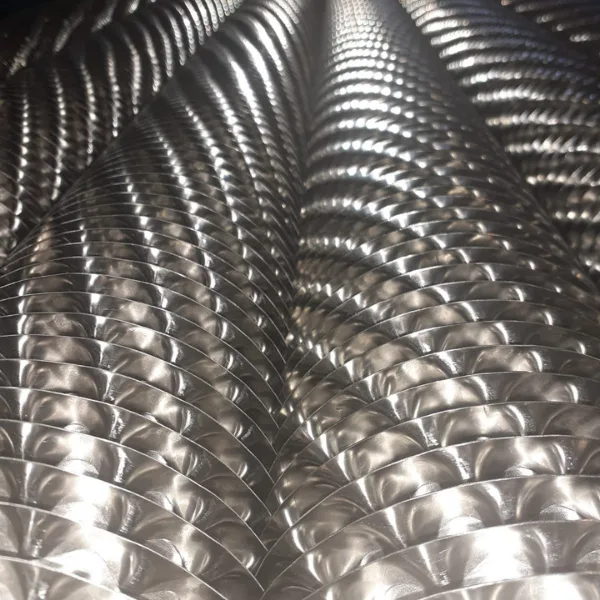
When comparing copper coils with stainless steel coils, the first question is which design suits the working fluid and operating conditions. Two coils designed for the same duty may require different tube dimensions, surface areas and connection details. There is no single material that is best for every application.
In HEATMEK’s coil manufacturing, material selection is assessed alongside temperature and pressure requirements. A decision based only on the outside dimensions of an existing unit can overlook fluid compatibility or access for maintenance.
Does thermal conductivity alone determine capacity?
Copper’s high thermal conductivity can reduce the thermal resistance of the tube wall. Overall unit performance also depends on flow inside the tube, air or liquid movement outside it, fin contact and fouling. The ratio between two materials’ thermal conductivities should therefore not be treated as the ratio between coil capacities.
Compare both options at the same inlet temperatures, flow rates and allowable pressure drops. This compares the equipment’s operating result rather than a single property of the metal.
Is stainless steel compatible with every fluid?
Stainless steel does not offer unlimited corrosion resistance. Grade, fluid chemistry, chloride content, temperature and cleaning chemicals must be considered together. Localised corrosion is a particular concern in chloride-containing environments. A material used successfully in one process should not automatically be assumed suitable for another.
Fluid compatibility must also be checked for copper. Choosing solely on purchase price without considering water quality, contaminants and operating conditions can lead to unexpected maintenance.
Use five questions for a practical comparison
- What is the fluid? Provide the composition of the water, steam, oil or process liquid and any available analysis.
- What are the temperature and pressure ranges? Include normal operation, start-up, shutdown and possible transient conditions.
- How will the unit be cleaned? Assess the compatibility of cleaning chemicals and methods with the selected material.
- Will the connections fit the existing system? Consider tube and header materials, connection types and installation space together.
- What maintenance conditions are expected? Include access, fouling tendency and planned shutdowns in the specification.
Purchase price and operating cost are different
The price per kilogram of material does not explain the total cost of a finished coil. Tube and fin geometry, manufacturing method, header arrangement, quality checks and scope of supply all affect quotations. Two prices cannot be compared directly if they cover different capacities or test conditions.
Maintenance frequency and production downtime also matter to the operator. To compare alternatives against the same technical requirement, use the information checklist in our coil pricing and quotation guide.
Frequently asked questions
Will a copper coil always be smaller?
No. Dimensions depend on air and fluid flow rates, temperature differences, fin geometry and pressure drop limits together.
Can the material of an existing coil be changed?
A material change requires a new technical assessment. Even with identical external dimensions, the same thermal and mechanical performance should not be assumed.
Send your process information to HEATMEK so that we can assess copper, stainless steel or other material options for your application.
Technical sources: Copper Development Association — Copper Tube for Heat Exchangers; Outokumpu — Corrosion Resistance.