
What Is an Economizer? Working Principle and Boiler Applications
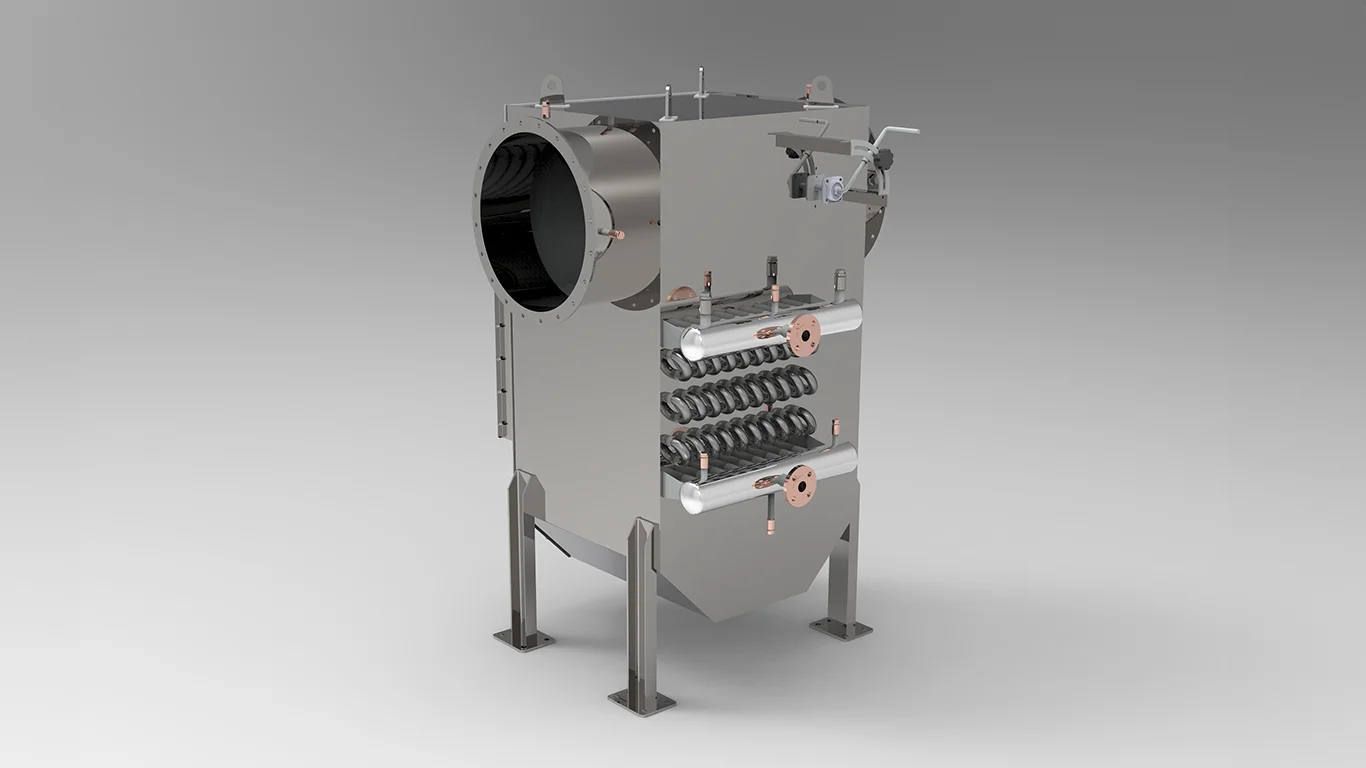
An economizer recovers part of the energy in hot flue gas and transfers it to another fluid. A common steam boiler application is preheating feedwater before it enters the boiler. This can reduce the heat the boiler must supply to bring the water to its required condition.
The result depends on the existing boiler and site operating conditions. An economizer cannot be assumed to provide the same fuel savings or a fixed payback period at every facility.
How does an economizer work?
Flue gas passes on one side of a heat transfer surface while the fluid to be heated circulates on the other. The streams do not mix directly. Their temperature difference drives heat transfer: flue gas outlet temperature falls while water temperature rises.
The site must have a use for the recovered heat. Sufficient water flow or another suitable heat consumer should be available while the boiler operates. Adding equipment alone does not make unused heat useful.
Condensing and non-condensing economizers
A non-condensing application cools the flue gas within the limits set by the design. A condensing application also recovers heat as water vapour in the flue gas condenses. This operating mode requires separate assessment of materials, condensate management and the flue system.
Dew-point conditions depend on gas composition and fuel. A single safe flue gas outlet temperature should therefore not be given for all systems. A lower outlet temperature should not be targeted without reviewing the existing flue and boiler manufacturer’s requirements.
Which facilities are candidates?
Boilers operating for long periods, production facilities with regular heat demand and processes with both hot flue gas and a useful colder fluid are candidates for assessment. Operating hours alone are insufficient, however. Part-load operation, shutdowns and the timing of heat demand also matter.
HEATMEK’s economizer solutions address industrial heat recovery needs. Application decisions should follow a combined review of the gas and water sides.
Data to prepare before a project
- Fuel type, boiler capacity and existing operating loads.
- Measured flue gas temperature and, if available, flow rate or combustion analysis.
- Water inlet temperature, flow rate and target conditions.
- Annual operating hours and the times when recovered heat can be used.
- Flue layout, installation space and access for cleaning.
- Allowable gas-side and water-side pressure drops.
A heat recovery surface adds resistance to the flue path. Fan capability and flue draft must therefore be checked. Fouling risk and cleaning access also form part of the design. Maintaining performance in operation matters as well as the initial investment assessment.
Frequently asked questions
Is an economizer the same equipment as a boiler?
No. An economizer is heat transfer equipment used to recover waste heat from a boiler or process.
Can every boiler be retrofitted with an economizer?
Suitability depends on the flue, fan, fuel, water circuit and layout. The existing boiler’s operating requirements must be considered.
For the economic assessment, read our economizer selection and payback guide. Send your project data to HEATMEK.
Technical sources: US Department of Energy — Feedwater Economizers; Australian Government — Waste Heat Recovery.